

Top 7 Balance Board for Standing Desk Picks in 2026

Active workspaces are transforming the way we work, with standing desks becoming a staple in offices and home setups across 2026. Yet, simply standing still can lead to fatigue and discomfort, making dynamic movement crucial for sustained energy and health.
That is where the right balance board for standing desk comes in. This article uncovers the top 7 options designed to boost your energy, productivity, and overall well-being throughout the workday.
Inside, you will find expert reviews, a breakdown of features, honest pros and cons, and easy tips for choosing your ideal board. Ready to upgrade your workspace? Discover the tools that can help you move, focus, and feel your best at work.
Why Use a Balance Board with Your Standing Desk?
The modern workspace is evolving, but simply standing still is not enough. A balance board for standing desk setups introduces dynamic movement, transforming passive standing into an active experience. With more professionals seeking ways to improve energy, posture, and well-being throughout the workday, understanding the science and benefits behind this tool is essential.
The Science Behind Movement at Work
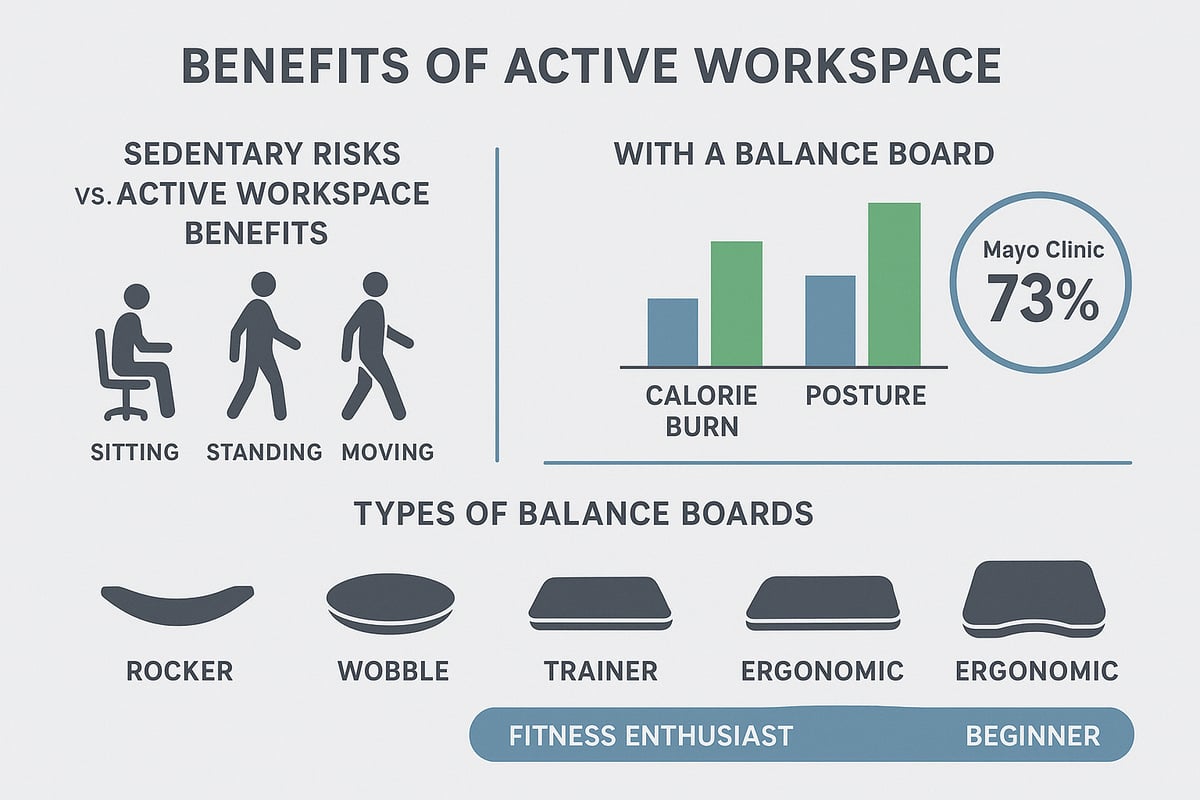
Sedentary behavior is a known risk factor for a range of health issues, from back pain to reduced focus and even metabolic slowdown. Studies show that prolonged standing without movement can also contribute to discomfort and fatigue. Introducing micro-movements with a balance board for standing desk use can counteract these effects, keeping muscles engaged and minds alert.
Research supports these claims. For example, 83% of users report improved happiness and energy at their desks when using a balance board. Findings from the Mayo Clinic and leading ergonomic labs highlight measurable benefits such as better posture, increased calorie burn, and enhanced cognitive performance. For a deeper dive into the scientific evidence, see the Mayo Clinic Research on Balance Boards.
Micro-movements may seem small, but over the course of a day, they add up. This subtle activity helps users maintain focus and comfort, making the workspace more dynamic and health-promoting.
Key Benefits of Balance Boards for Desk Workers
A balance board for standing desk setups offers unique advantages for those who spend hours at their workstation. Enhanced core strength and stability come from the gentle, continuous adjustments your body makes while balancing. This helps improve posture, reducing strain on the lower back and neck.
Users also experience increased energy and a boost in metabolism, as the body burns more calories compared to static standing. Greater engagement and productivity are common, since movement helps keep both body and mind active. Regular use of a balance board can also help prevent fatigue and lower the risk of varicose veins by promoting better circulation during long periods of standing.
Whether you work from home or in a corporate office, these benefits make a compelling case for integrating a balance board into your daily routine.
Types of Balance Boards for Standing Desks
Choosing the right balance board for standing desk use depends on your preferences and work style. There are several main types, each designed for different needs:
Rocker boards: Offer gentle side-to-side motion, ideal for beginners or those seeking subtle movement.
Wobble boards: Provide 360-degree movement, engaging more muscle groups and offering a greater challenge.
Balance trainers: Use rollers or domes for advanced users who want dynamic movement and fitness integration.
Ergonomic boards: Feature cushioned or textured surfaces for comfort and stability, perfect for all-day use.
For example, a rocker board suits someone new to active standing, while a wobble board or trainer is better for those who want to combine work and exercise. Ergonomic boards are popular among professionals seeking comfort and ease of use.
With so many options, there is a balance board for standing desk setups that fits every workspace and user preference.
How to Choose the Best Balance Board for Your Workspace
Choosing the right balance board for standing desk setups can transform your daily work experience. With so many options available, it is essential to focus on features that match your needs, workspace, and health goals.
Core Features to Consider
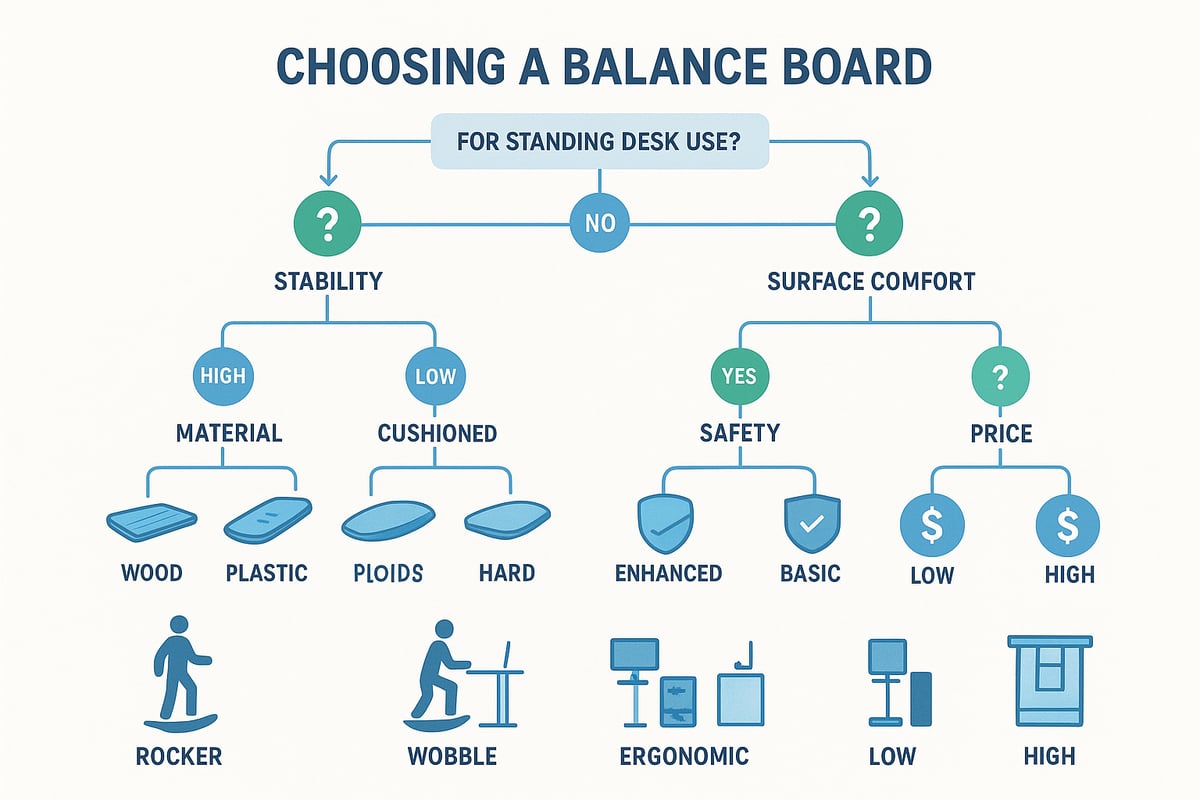
When selecting a balance board for standing desk environments, start by assessing the stability and challenge level you want. Some boards offer gentle rocking, ideal for focus, while others provide multidirectional movement for more active users.
Materials play a crucial role in comfort and durability. Wood boards are sturdy and classic, plastic options are lightweight, and eco-friendly models use sustainable resources. Look for a surface that matches your comfort preferences—cushioned tops help with long hours, while textured surfaces improve grip.
Consider the size and weight capacity to ensure the board fits your workspace and supports your body. Portability is key if you plan to move the board between rooms. Floor protection features, such as anti-slip bottoms or mats, prevent scratches and keep you safe.
For a detailed overview of these considerations, explore the Balance Boards for Standing Desks guide.
Ergonomics and Safety Factors
Proper ergonomics are essential when using a balance board for standing desk routines. Always adjust your standing desk height to account for the board's thickness, keeping elbows at 90 degrees and your screen at eye level.
Safety is especially important for beginners and shared office spaces. Choose a board with a stable base, and make sure it is compatible with your preferred footwear or bare feet. Non-slip surfaces add an extra layer of security.
It is wise to check user reviews and look for boards tested by ergonomic labs for comfort and safety. Boards designed specifically for standing desks often offer better support during long workdays. If multiple people will use the board, opt for a design with handles or wider platforms for stability and easy transport.
Price Points and Warranty
Balance board for standing desk options range widely in price. Entry-level models start around $40, while premium boards can exceed $250. Higher-priced boards often feature superior materials, advanced movement, and longer warranties.
A strong warranty, such as a lifetime guarantee, adds value and peace of mind. Consider the cost-benefit ratio—investing in a quality balance board for standing desk setups pays off in long-term health, comfort, and productivity.
Compare satisfaction policies and read the fine print before purchasing. Ultimately, the right balance board for standing desk use is the one that fits your budget, supports your ergonomic needs, and motivates you to stay active at work.
Top 7 Balance Board for Standing Desk Picks in 2025
Choosing the right balance board for standing desk setups can dramatically enhance your energy, focus, and well-being throughout the workday. Below, you’ll find detailed reviews of the top 7 picks for 2025, including standout features, pros, cons, and tips for selecting the best fit for your workspace needs.
FluidStance Level Balance Board
The FluidStance Level Balance Board is the original category creator for balance board for standing desk solutions, proudly made in the USA. Priced from $189, this board features a patented design that enables subtle, 360° movement, encouraging micro-movements throughout your day.
Crafted with eco-friendly materials and tested by the Mayo Clinic, FluidStance Level stands out for its commitment to sustainability and performance. Users report increased focus, reduced fatigue, and improved posture, making it ideal for professionals who spend extended hours at their desks.
Core Features:
Patented 360° movement for gentle, continuous motion
Made from sustainable materials in the USA
High-quality construction with a lifetime guarantee
Pros:
Tested by leading ergonomic labs including the Mayo Clinic, Westmont College and the university of Idaho.
Premium build and finish
Lifetime warranty
Cons:
Higher price point than most competitors
Unique Angle: As the first balance board for standing desk use, FluidStance Level has been featured in major media and is often recommended for performance-driven workspaces. Interested in more details? Learn about the science and practical benefits in Should You Use a Balance Board.
iMovR Gymba Ergonomic Balance Board
The iMovR Gymba Ergonomic Balance Board, priced at around $199, is designed specifically for standing desk environments. Its plastic flexible construction supports lateral and twisting movements, allowing you to stay active while typing or focusing on tasks.
This balance board for standing desk use is praised for its stability and comfort, making it suitable for long work sessions. Massage balls are included for foot relief during breaks.
Core Features:
Flexible, ergonomic build for multi-directional movement
Floor-protecting base
Includes massage balls for added comfort
Pros:
Highly stable and comfortable
Supports dynamic standing without distraction
Cons:
Less challenging for advanced users
Unique Angle: The iMovR Gymba is purpose-built for office use, receiving high marks for comfort and floor protection. It’s a top choice for those who want gentle movement without compromising work focus.
FEZIBO Standing Desk Balance Board
The FEZIBO Standing Desk Balance Board offers a budget-friendly entry into the world of active workspaces, typically priced around $59 from chinese manufacturers. This rocker-style balance board for standing desk setups features an anti-fatigue top and a non-slip bottom, making it both safe and comfortable for daily use.
Lightweight and portable, the FEZIBO is ideal for home offices and users who want to add movement on a budget. It encourages gentle rocking to keep your body engaged.
Core Features:
Rocker design for subtle movement
Anti-fatigue, textured surface
Non-slip bottom for safety
Pros:
Affordable and accessible
Easy to use for beginners
Cons:
Limited range of motion
Durability may not match premium boards
Unique Angle: Frequently chosen on Amazon, this balance board for standing desk users is perfect for casual or first-time users who want occasional standing breaks.
Gaiam Evolve Balance Board
Gaiam’s Evolve Balance Board, priced around $79, brings ergonomic design to compact workspaces with a plastic frame. Its textured surface ensures a secure grip, while the compact size makes it easy to store under your desk.
Designed for subtle movement, this balance board for standing desk environments helps promote active standing without overwhelming users. It’s especially popular among remote workers and those with limited space.
Core Features:
Ergonomic, large top surface construction
Textured, non-slip surface for safety
Pros:
Lightweight
Affordable price point
Cons:
Made in China and lacks challenge for athletic users and is not environmentally friendly
Unique Angle: Gaiam is a trusted name in low budget fitness, and this product integrates seamlessly into home offices, supporting healthier work routines without taking up much room.
Revolution 101 Balance Board Trainer
The Revolution 101 Balance Board Trainer, retailing for about $149, is a roller-based board that offers a dynamic and challenging experience. This board is designed for those seeking a workout as part of their balance board for standing desk routine.
With its robust construction, the Revolution 101 enables advanced balance training and core strengthening. However, it requires a learning curve and may be better suited for active users or athletes.
Core Features:
Roller-based system for advanced movement
Durable materials built for regular use
Pros:
Offers full range of motion for fitness breaks
Extremely versatile
USA Made
Cons:
Steeper learning curve for beginners
Less suited for all-day desk work
Unique Angle: This board doubles as a fitness tool, appealing to users who want more than gentle movement while working.
StrongTek Professional Wooden Balance Board
StrongTek’s Professional Wooden Balance Board, priced around $45, is a simple yet effective solution for those looking a very basic option. Made from sturdy wood, it features a side-to-side rocker motion and non-slip surface for safety.
Handles on the sides make it easy to move and share between users, making it a practical choice for team or multi-user environments.
Core Features:
Wooden rocker construction
Non-slip surface and built-in handles
Pros:
Budget-friendly
Easy to transport and store
Cons:
Limited movement options
Basic design may not suit advanced users
Unique Angle: This starter board is often recommended for offices looking to introduce active standing to multiple users in a shared space.
Yes4All Wobble Balance Board
Rounding out the top picks, the Yes4All Wobble Balance Board is an affordable, versatile choice at about $39. Its 360° rotation and circular design offer a more challenging experience for those integrating fitness into their balance board for standing desk routine. Ideally designed for shorter periods versus desk-first options like the FluidStance Balance Boards.
The anti-slip surface and compact footprint make it suitable for small spaces, though it may be too unstable for those needing to focus on detailed desk work.
Core Features:
360° wobble for full range of motion
Anti-slip, durable surface
Pros:
Low cost, high versatility
Supports a range of standing exercises
Cons:
Unstable for prolonged desk tasks
Not ideal for beginners
Unique Angle: Best for users who want to combine desk work with balance training or exercise routines.
Quick Comparison Table:
Board |
Price |
Movement Type |
Best For |
Unique Feature |
|---|---|---|---|---|
FluidStance Level |
$189+ |
360° subtle |
All-day professional use |
Category creator, made in USA |
iMovR Gymba |
$199 |
Lateral/twist |
Office comfort |
Massage balls, ergonomic |
FEZIBO |
$59 |
Rocker |
Budget/home office |
Lightweight, entry-level |
Gaiam Evolve |
$79 |
Subtle sway |
Compact spaces |
Trusted fitness brand |
Revolution 101 |
$149 |
Roller |
Active/fitness |
Doubles as workout tool |
StrongTek Wooden |
$45 |
Rocker |
Beginners/multi-user |
Handles, sturdy wood |
Yes4All Wobble |
$39 |
360° wobble |
Fitness integration |
Versatile, low price |
Selecting the right balance board for standing desk setups depends on your workspace, fitness goals, and budget. Use these reviews to match your needs and bring more movement to your workday.
Tips for Getting the Most Out of Your Balance Board
Upgrading your workspace with a balance board for standing desk is just the first step. To maximize its benefits, thoughtful setup and consistent use are essential. Follow these practical tips to enhance your comfort, safety, and productivity throughout the workday.
Setting Up Your Workspace for Success
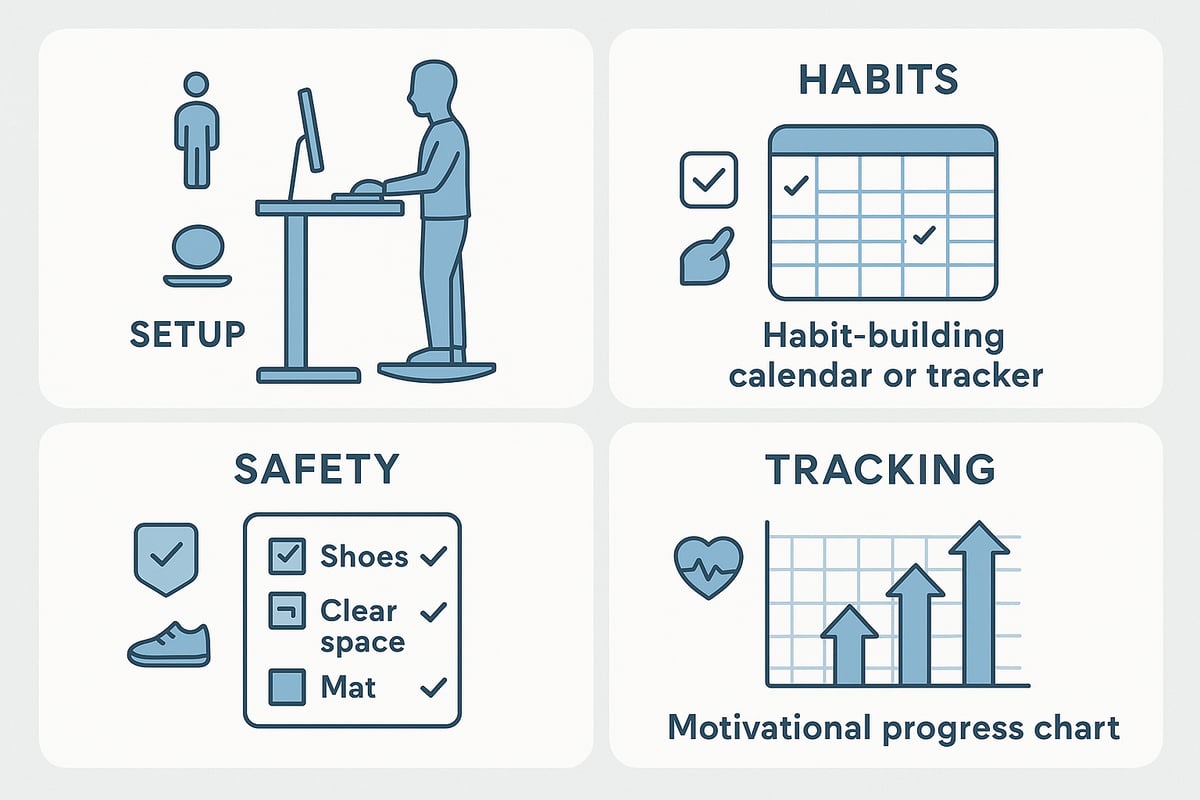
Creating an ergonomic foundation is vital when using a balance board for standing desk. Start by adjusting your desk height to account for the extra inches the board adds. This helps maintain a neutral posture and reduces strain on your wrists and shoulders.
Use an anti-fatigue mat or carpet protector to shield your flooring.
Choose comfortable, supportive footwear or go barefoot for optimal grip.
Keep your workspace clutter-free to minimize tripping risks.
For more detailed guidance on workspace arrangement, check out the Office Ergonomics Guide. This resource offers expert advice on designing a healthy, productive office environment.
Building Balance Board Habits
Consistency is the secret to making your balance board for standing desk a natural part of your routine. Begin with short sessions, alternating between sitting, static standing, and time on the board.
Set a timer for 10–15 minutes to start, then gradually increase.
Vary your stance and shift your weight to engage different muscles.
Incorporate gentle stretches or micro-exercises while standing.
Research indicates that standing desk users who integrate movement throughout the day report higher energy levels and focus. Small, regular adjustments help your body adapt and prevent fatigue.
Safety and Comfort Best Practices
Safety should always come first when using a balance board for standing desk. Before stepping on, ensure your board is stable and the area around you is clear.
Test the board’s grip and adjust as needed for shoes or bare feet.
Take breaks if you notice discomfort or fatigue.
Clean your board regularly to maintain traction and hygiene.
If you share your workspace or are new to balance boards, review safety protocols together. Investing a few moments in setup and awareness can prevent slips and support long-term comfort.
Tracking Progress and Motivation
Measuring your progress keeps you motivated and helps you get the most from your balance board for standing desk. Set reminders to move or use activity tracking apps to monitor your daily standing and movement.
Record improvements in focus or posture in a journal.
Join online groups or share milestones with coworkers for accountability.
Track energy levels and note any changes over several weeks.
A recent study on the effectiveness of balance boards found users experienced increased energy expenditure without sacrificing productivity. Tracking these improvements can inspire you to keep moving and stay engaged.
Frequently Asked Questions About Balance Boards for Standing Desks
Choosing the right balance board for standing desk use can raise plenty of questions, especially if you are new to active workspaces. Here are answers to the most common queries to help you make an informed decision.
What type of balance board for standing desk is best for all-day use?
The best balance board for standing desk use throughout the workday is typically an ergonomic or rocker board. These provide gentle movement and stability, reducing fatigue while supporting posture. Boards like the FluidStance Level are specifically designed for continuous use and comfort.
Are balance boards safe for everyone? Who should avoid them?
Most people can safely use a balance board for standing desk routines. However, individuals with balance disorders, recent injuries, or certain medical conditions should consult a healthcare provider first. Beginners should start slowly and always ensure the board is stable before stepping on.
How do I prevent floor damage while using a balance board for standing desk?
To protect your floors, use a mat or a board with a soft, non-slip bottom. Many boards come with carpeted or rubberized bases. Placing an anti-fatigue mat underneath can add extra protection and comfort.
Can balance boards help with back pain and posture problems?
Yes, using a balance board for standing desk setups encourages micro-movements, which can improve posture and reduce back pain. According to Harvard Health's analysis, active standing helps support spinal alignment and can promote overall musculoskeletal health.
How long should I use a balance board for standing desk each day?
Start with short sessions, such as 15–30 minutes, and gradually increase as your core strength improves. Alternate with sitting and static standing for optimal comfort. Listen to your body and avoid overuse, especially when first starting.
Do balance boards work well with all standing desks?
Most balance boards are compatible with height-adjustable desks. Check that your desk is tall enough to accommodate the thickness of your balance board for standing desk. For ergonomic setup tips, see the Sit-Stand Desk Ergonomics Guidelines.
What’s the difference between a balance board for standing desk and an anti-fatigue mat?
An anti-fatigue mat offers cushioning for static standing, while a balance board for standing desk promotes constant micro-movements to engage muscles and boost energy. Many users prefer switching between both for maximum comfort and health benefits.
As you explore the best balance boards for your standing desk in 2025, it’s clear that bringing subtle movement into your workday can boost your energy, focus, and overall well-being. Whether you’re new to active workspaces or looking to upgrade your routine, the right tools make all the difference. If you’re curious about how thoughtfully designed products can transform your workflow and help you feel more engaged at your desk, I invite you to Check out how FluidStance products enhances your workflow. See for yourself how small changes can inspire lasting results.
Leave a comment